AMA Festival 2026 @ AMA Festival
AMA Festival, , Vicenza Directions
Sat 11.07.2026 00:00
AMA Festival 2026 at AMA Festival at 2026-07-11
Performers
-
Scorpions
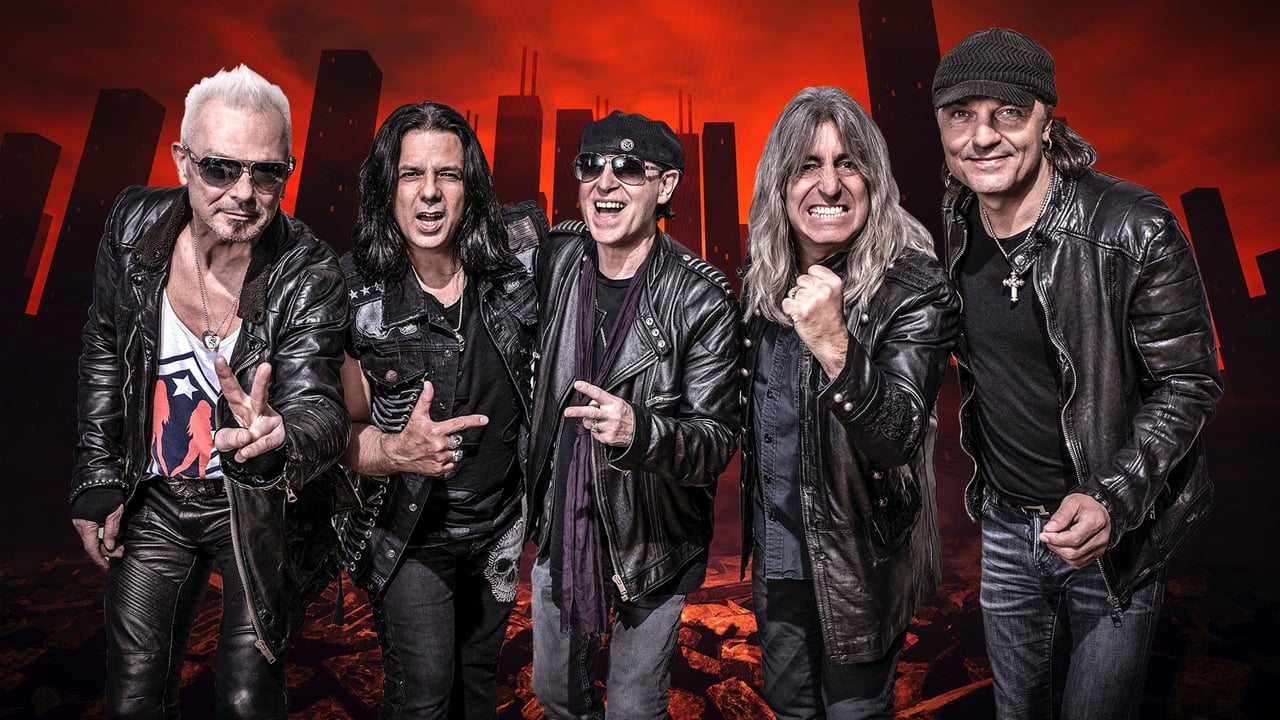
Scorpions are a hard rock/heavy metal band from Hannover, Germany, best known for their 1980s rock anthem "Rock You Like a Hurricane" and their singles "Wind of Change", "No One Like You", "Still Loving You", and "Send Me an Angel". The band has sold over 70 million records worldwide.
Formation and early history (1965-1973)
Rudolf Schenker, the band's rhythm guitarist, set out to find a band in 1965. At first, the band was school-kind with beat influences and Schenker himself on vocals. Things began to come together in 1969 when Schenker's younger brother Michael and vocalist Klaus Meine joined the band. In 1972 the group recorded and released their debut album Lonesome Crow with Lothar Heimberg on bass and Wolfgang Dziony on drums. During the Lonesome Crow tour, Scorpions opened for upcoming British band UFO. At the end of the tour the members of UFO offered guitarist Michael Schenker the lead guitar job; an offer which he soon accepted. Uli Roth was then called in temporarily to finish off the tour.
The departure of Michael Schenker led to the break up of the Scorpions. In 1973, guitarist Uli Roth, a friend of the Schenker brothers, was in a band called Dawn Road. He had been offered the role as lead guitarist in Scorpions after Michael Schenker's departure but turned the band down. Rudolf decided that he wanted to work with Roth but did not want to resurrect the last Scorpions lineup.
Rudolf Schenker attended some of Dawn Road's rehearsals and ultimately decided to join the band, which consisted of Roth, Francis Buchholz (bass),Achim Kirschning (keyboards) and Jurgen Rosenthal (drums). Roth persuaded Rudolf Schenker to invite Klaus Meine to join, which he did soon after. While there were more members of Dawn Road than Scorpions in the band, they decided to use the Scorpions name because they had released an album and were known in the German hard rock scene.
Rise to popularity (1974-1978)
In 1974 the new line-up of Scorpions released Fly to the Rainbow. The album proved to be more successful than Lonesome Crow and songs such as "Speedy's Coming" and the title track began to establish the band's sound. Achim Kirschning decided to leave after the recordings but subsequently guested on keyboards for the next two albums. Soon after, Jürgen Rosenthal had to leave as he was being drafted into the army, and was replaced by a Belgian drummer, Rudy Lenners. He later joined German progressive rock band called Eloy in 1976 and recorded three albums with them. It wasn't until the following year that the band hit their stride with the release of In Trance. In Trance marked the beginning of Scorpions' long collaboration with German producer Dieter Dierks. The album was a huge step forward for Scorpions and firmly established their hard rock formula, while at the same time garnering a substantial fan base, both at home and abroad.
In 1976, Scorpions released Virgin Killer. The album's cover, which featured a fully nude prepubescent girl, brought the band considerable criticism and was ultimately pulled or replaced in several countries. In spite of the controversy - lead singer Klaus Meine even expressed shock - the album garnered significant praise from critics and fans alike. The following year, Rudy Lenners resigned due to health reasons and was replaced by Herman Rarebell.
The follow-up to Virgin Killer, Taken by Force, was the first Scorpions record to be aggressively promoted in the United States. The album's single, "Steamrock Fever", was added to some of RCA's radio promotional records. Roth was not happy with the label's efforts and the commercial direction the band was taking. Although he performed on the band's Japan tour, he departed to form his own band, Electric Sun prior to the release of the resultant double live album Tokyo Tapes. Tokyo Tapes was released in the US and Europe six months after its Japanese release. By that time in mid 1978, Scorpions recruited new guitarist Matthias Jabs.
Commercial success (1979-1990)
Following the addition of Jabs, Scorpions left RCA for Mercury Records to record their next album. Just weeks after being evicted from UFO for his alcohol abuse, Michael Schenker also returned to the group for a short period during the recordings of the album. The result was Lovedrive. Containing such fan favorites as "Loving You Sunday Morning", "Holiday" and the instrumental "Coast to Coast", the "Scorpions formula" of hard rock songs mixed in with melodic ballads was firmly cemented. Lovedrive peaked at #55 on the US charts proving that Scorpions were gathering an international following. After the completion and release of the album, the band decided to retain Michael in the band, thus forcing Matthias Jabs to leave. But after a few weeks of the tour, Michael, still coping with alcoholism, kept missing a few gigs and Matthias Jabs was brought back to fill in for him on those occasions when he couldn't perform. In April 1979, during their tour in France, Matthias Jabs was brought in permanently to replace Michael Schenker.
In 1980, the band released Animal Magnetism, again with a provocative cover showing a girl kneeling in front of a man's crotch. While Animal Magnetism contained classics such as "The Zoo" and "Make It Real", it was a critical disappointment when compared with Lovedrive.
The band then began working on their next album. Blackout was released in 1982 and quickly became the band's best selling to date, eventually going platinum. Blackout spawned three hit singles: "Dynamite," "Blackout" and "No One Like You".
It was not until 1984 and the release of Love at First Sting that the band finally cemented their status as rock superstars. Propelled by the single "Rock You Like a Hurricane", Love at First Sting went up the charts and went double platinum a few months after its release. MTV gave the album's videos "Rock You Like a Hurricane", "Bad Boys Running Wild", "Big City Nights", and the power ballad "Still Loving You" significant airtime, greatly contributing to the album's success.
The band toured extensively behind Love at First Sting and decided to record and release their second live album, World Wide Live. Recorded over a year long period and released at the height of their popularity, the album was another success for the band, peaking at #17 on the charts.
After their extensive world tours, the band finally returned to the studio to record Savage Amusement. Released in 1988, four years after their previous studio album, Savage Amusement represented a more polished pop sound similar to the style Def Leppard had found success with.
On the Savage Amusement tour in '88, Scorpions became only the second Western group to play in the Soviet Union (the first being Uriah Heep in December 1987), with a performance in Leningrad. The following year the band returned to perform at the Moscow Music Peace Festival.
Wishing to distance themselves from the Savage Amusement style, the band separated from their long-time producer and "Sixth Scorpion," Dieter Dierks, ultimately replacing him with Keith Olsen when they returned to the studio in 1990. Crazy World was released that same year and displayed a less polished sound. The album was a hit, propelled in large part by the massive success of the ballad "Wind of Change".
Later days (1991-present)
After the release of Crazy World Francis Buchholz, the band's long-serving bassist, left the group. Replacing him was Ralph Rieckermann who handled bass duties until 2002.
In 1993 Scorpions released Face the Heat. For the recording process, Scorpions brought in producer Bruce Fairbairn. The album's sound was more metallic than melodic. Face the Heat was a moderate success.
In 1995, a new live album, Live Bites, was produced. The disc documented live performances from their Savage Amusement Tour in 1988, all the way through the Face the Heat Tour in 1994. While the album had a much cleaner sound in comparison to their best-selling live album, World Wide Live, it was not as successful.
Prior to recording their 13th studio album, 1996's Pure Instinct, drummer Herman Rarebell left the band to set up a recording company. Curt Cress took charge of the drumsticks for the album before James Kottak took over permanently.
1999 saw the release of Eye II Eye and a significant change in the band's style, mixing in elements of pop and techno. While the album was slickly produced, fans were unsure what to make of the band, responding negatively to almost everything from pop-soul backup singers to the electronic drums present on several songs. The video to the album's first European single, "To Be No. 1", featured a Monica Lewinsky lookalike which did little to improve its popularity.
The following year Scorpions had a fairly successful collaboration with the Berlin Philharmonic that resulted in a 10-song album named Moment of Glory. The album went a long way towards rebuilding the band's reputation after the harsh criticism of Eye II Eye.
In 2001, Scorpions released Acoustica, a live unplugged album featuring acoustic reworkings of the band's biggest hits, plus new tracks. While appreciated by fans, the lack of a new studio album was frustrating to some, and Acoustica did little to return the band to the spotlight.
In 2004, the band released Unbreakable, an album that was hailed by critics as a long awaited return to form. The album was the heaviest the band had released since Face the Heat, and fans responded well to tracks such as "New Generation", "Love 'em or Leave 'em" and "Deep and Dark". Whether a result of poor promotion by the band's label or the long time between studio releases, Unbreakable received little airplay and did not chart. Scorpions toured extensively behind the album, and played as special guests with Judas Priest during the 2005 British tour.
In early 2006, Scorpions released the DVD 1 Night in Vienna that included 14 live tracks and a complete rockumentary.
In May of 2007, Scorpions released Humanity - Hour 1 in Europe. Humanity - Hour 1 became available in the U.S. on August 28, 2007 on New Door Records, entering the Billboard charts at number #63. -
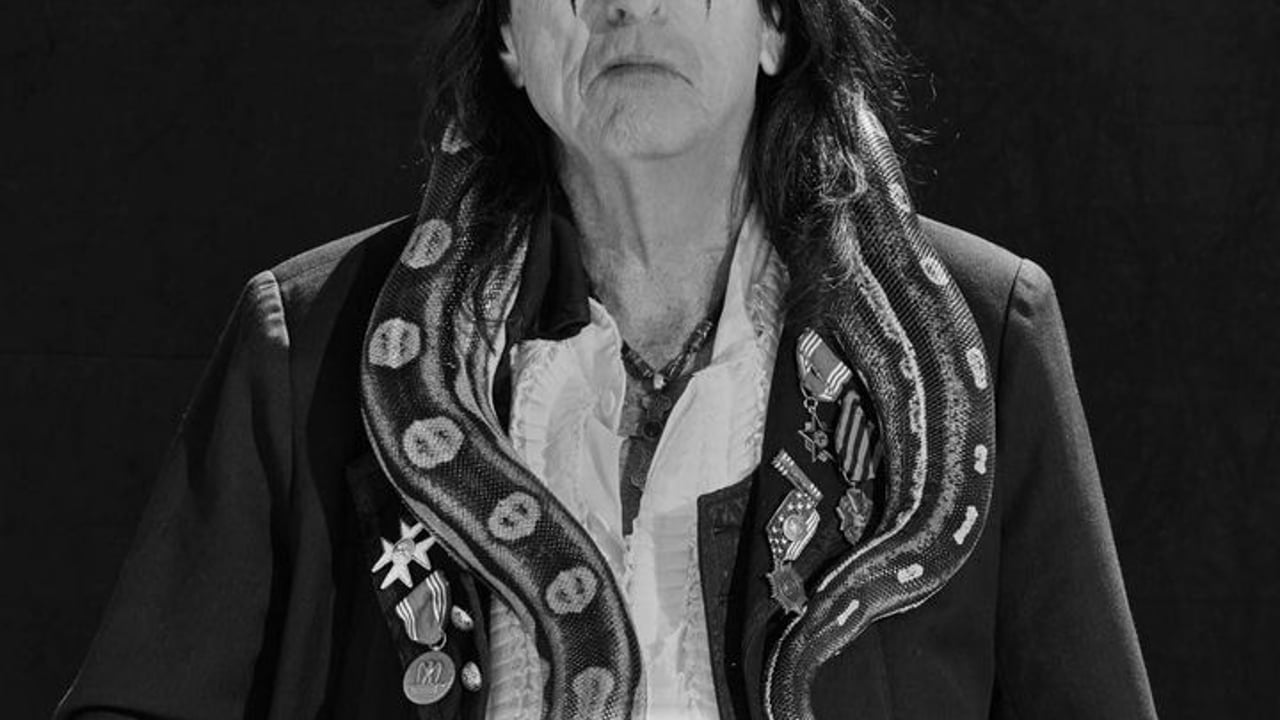 Alice Cooper
In 1975, Alice Cooper joined forces with longtime collaborator and producer Bob Ezrin to record his first solo album Welcome to My Nightmare, a theatrical concept album about the nightmares of a young boy named Steven. Now, he’s followed Steven into adulthood and presents Welcome 2 My Nightmare, a new but familiar concept album about the fear, anxiety and disgust that haunt Alice Cooper’s dreams in an era of Facebook, Lady Gaga, Sketchers and Angry Birds.
“Alice hates technology, disco is still a nightmare for him and working in a cubicle from nine-to-five would give him cold sweats,” Cooper says. “At the same time, this is a nightmare so all these normal life things are thrown into this crazy world that’s only logical when you’re in the nightmare. You could have an elephant in your garage, and you’re on the lawn in a pink tutu cooking hot dogs. And at the time it’s fine. But when you wake up you go, ‘How insane is that? Where did that come from?’ So we realized that having Alice in a modern-world nightmare is a great place to come from theatrically because we can go anywhere we want and make it as insane as possible.”
A wild, surreal odyssey, Welcome 2 My Nightmare provided Cooper and Ezrin the opportunity to work with numerous musicians and experiment with various musical styles. The three surviving members of the original band, guitarist Michael Bruce, bassist Dennis Dunaway and drummer Neal Smith, co-wrote three songs and they all played on “When Hell Comes Home,” a gritty ‘70s-style rock track about the nightmare of domestic abuse. “I wanted the song to feel like it was off of Love it to Death or Killer, Cooper says. “But we never had to talk about playing the song ‘70s-style, they just did it. It was great and there was nothing we could do to make it any more ‘70s ‘cause that’s just the way these guys play.”
The collaborations with his fellow original band members stemmed from their 2010 induction into the Rock and Roll Hall of Fame, for which they reunited to play four songs. “I was always looking for a logical reason to work with them again,” Cooper says. “When we broke up there was no bad blood. Most bands break up and they start suing each other. We never broke up on that level. We broke up on a very friendly level. ‘You go do what you’re gonna do, I’m gonna do what I’m gonna do. Let’s see what happens.’ When we got in the Hall of Fame I called them up and I said, ‘We have to do four songs. Let’s get together and rehearse.’ And they sounded great. They played great. We did a few projects after that. We played a couple times together. And I said, ‘Let’s keep it going. Let’s get these guys on the album.’ And Bob said, ‘That’s a great idea. Let’s write with these guys.’ It just worked.”
The first single from Welcome 2 My Nightmare, “I’ll Bite Your Face Off,” is about a gorgeous but deadly female who takes Alice by the hand and guides him through the various scenes of his nightmare. The song was co-written by Neal Smith and features a swaggering ‘60s British rock rhythm, brash, bluesy guitars and sneering, seductive vocals. “We tried to make this sound as much like early Rolling Stones as possible and we really did capture that,” Cooper says. “We’ve been doing it onstage and the audience sings along without knowing the song.”
On “Disco Bloodbath Boogie Fever,” Cooper combines a tongue-in-cheek disco beat and rhythm with near-rap vocals and lyrics about taking a machine gun to zombie disco dancers who refuse to die. Then there’s the zany surf rock of “Ghoul’s Gone Wild,” the derelict down-on-his-luck slur of “The Last Man on Earth,” and the Beatles meet Gary Glitter show tune “The Congregation,” which stars Rob Zombie as a narrator describing such modern-day nightmares as telemarketers, lawyers, pimps, mariachi bands and mimes.
One of the highlights for Cooper is the throbbing, modern rocker “What Baby Wants,” which stars Ke$ha as the devil. “Some people thought I was crazy to have Ke$ha on the record, but I never saw her as one of these Britney Spears diva girls. I saw her more as a rock singer. So I said, ‘Let’s present you not as a diva, but as a rock singer on this.’ We wrote the song together and in the end the darker lyrics were hers.”
Like The original Welcome To My Nightmare, which was highlighted by “Only Women Bleed,” Welcome 2 My Nightmare also features a lovelorn ballad, “Something to Remember Me By,” which was written with Dick Wagner back when they released “I Never Cry” in 1976. “We never used it on an album before because I never felt I was good enough to sing that song,” Cooper reflects. “It was never in my key, I could never get it right. Finally, we got it where my voice is in the right place so we included it and it may be the prettiest ballad we ever wrote. Steve Hunter played guitar on it and we really got a nice Beatles-y sound out of it. So when you’re listening to it you hear this really pretty romantic song and then you realize that in the Nightmare Alice is singing to a pile of bones that used to be a girl.”
Fans of the first Welcome To My Nightmare will recognize melodic references to the original woven throughout the new record. For example, in the cinematic minor-key song “The Nightmare Returns,” Ezrin plays the theme from “Steven” when Cooper sings, “I think we’ve heard that song before.”
“I really like the idea of having some of the musical identity of the first album showing up in the second album,” Cooper says. “It really connects the two and if you’re a real Alice fan and you hear those themes it makes you feel comfortable.”
Welcome To My Nightmare, which came out in 1975, was a landmark album for Cooper. It was his first solo release, following a historic string of anthems written and recorded by the original band between 1971 and 1974, including “School’s Out,” “No More Mr. Nice Guy,” “Elected,” and “I’m Eighteen.” A multimedia smash long before the dawn of music television, Welcome To My Nightmare proved that Cooper could remain popular musically and could take theatricality to an entirely new level of dream by exposing audiences to the crippling fears of a seven-year-old child with an active imagination.
Welcome To My Nightmare spawned two major singles, the ominous, anthemic title track and the beautiful, melancholy acoustic ballad “Only Women Bleed,” and featured narration by horror movie icon Vincent Price. In addition to touring the live “Welcome To My Nightmare” show, Cooper created the prime time special The Nightmare, which was essentially the first long form music video. The program debuted in April 1975. In September he shot the concert film “Welcome To My Nightmare” at London’s Wembley Arena.
“A seven-year-old kid is pretty sure there’s something living in the closet and thinks that something is waiting for him under his bed,” Cooper says. “His toys are probably coming to life and trying to kill him. And I thought, ‘Well, that’s a good general approach for the album because we’ve all been kids and we’ve all had those nightmares.’”
From his first solo album, 1975's Welcome to My Nightmare through releases such as 1994's The Last Temptation and 2000's Brutal Planet, concept albums have been a specialty of Alice's, and this time he spins the story of a serial killer who imagines himself as the most predatory of all insects, trapping his prey, killing them, then enveloping his eight victims in silk, taking a leg from each of them. A web of intrigue, wrapped around some serious hard rock.
Co-produced by Alice with the team of Danny Saber [Black Grape, Rolling Stones, Ozzy Osbourne, David Bowie] and Greg Hampton [Bootsy Collins, Buckethead], songs like the opening "I Know Where You Live" and "Vengeance Is Mine," featuring a snaking metal guitar solo from Slash himself, evoke such classic Alice anthems as "Is it My Body," and "Under My Wheels" along with landmark albums like Love It To Death, Killer and School's Out. There's also a patented rock ballad in the tradition of "Only Women Bleed" and "I Never Cry" with "Killed by Love." Along Came a Spider features Cooper's touring band of drummer Eric Singer, bassist Chuck Garric and guitarists Keri Kelli and Jason Hook. Songwriting was handled by Alice with Saber, Hampton, Garric, Kelli and a few friends including former band member Damon Johnson and Warrant's Jani Lane.
Along Came a Spider has elements of serial killers such as Hannibal Lecter, Son of Sam, Ted Bundy, Jack the Ripper, Sweeney Todd and Psycho's Norman Bates with Alice himself taking the central part, acting out the murderer's diary -- challenging reality by Alice Cooper inhabiting the identity of a serial killer who imagines himself a spider. As he has in the past, Alice chronicles a classic battle between good and evil, with inevitable results.
"Evil should get punished," says Alice. "It should never win. And that, to me, is what's most satisfying. I may love Darth Vader when I watch Star Wars, but I feel relief when he finally gets what's coming to him."
...Read Alice's full biography @ AliceCooper.com -
The Damned
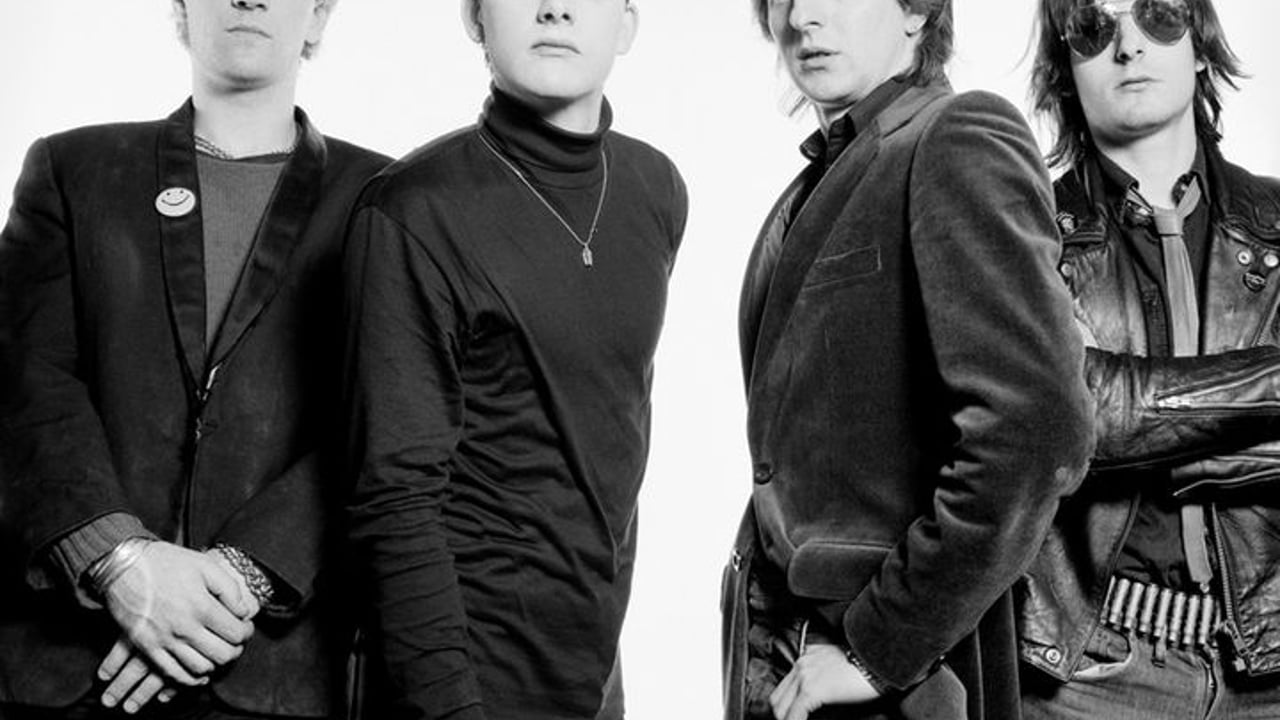
Led by lead vocalist, Dave Vanian, The Damned is a punk rock/ goth rock band from London, England founded in 1976.
-
Saxon
The Official Facebook Page for The Mighty Saxon!
-
Messa
Messa emerged on the first day of 2014.
The extreme diversity of their musical background immediately proved to be essential in the construction of the band’s sound: Prog, Black Metal, Punk, Dark Ambient, jazz, Blues and Doom… all those influences have been channelled into a sonic cauldron that the band defines “Scarlet Doom”.
The new album 'The Spin' is out now.